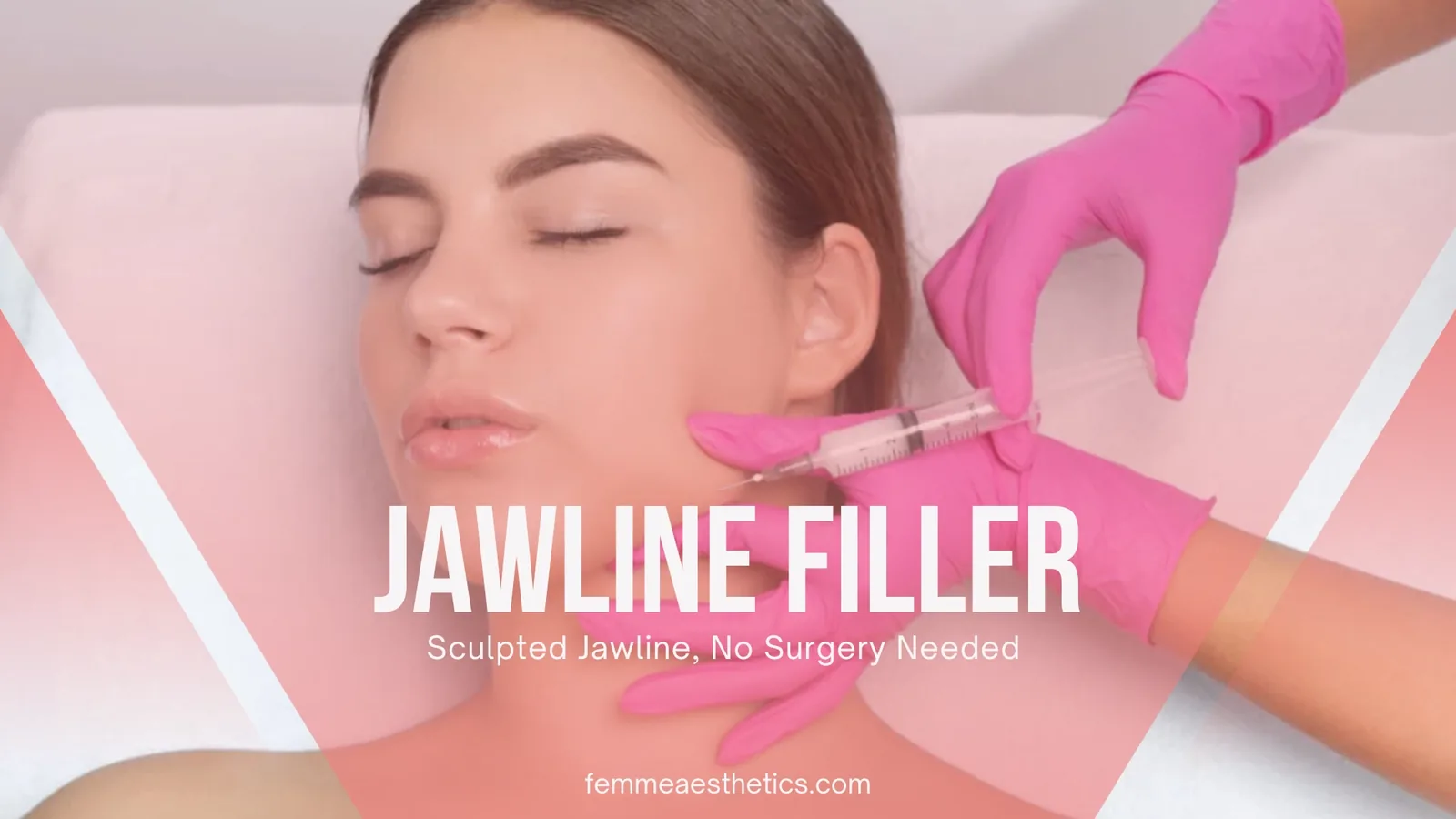
A defined chin anchors the lower third of the face. It shapes the jawline, balances the nose, sharpens the side profile, and quietly makes the entire face look more proportionate. When the chin lacks projection or structure, the rest of the face has to work harder — and a double chin or a heavier jowl often looks more pronounced than it really is. Chin fillers are a non-surgical way to add that missing structure in under an hour, with results you can see in the mirror the same afternoon.
This content is for educational purposes only and does not constitute medical advice. Individual results may vary. Consult a qualified healthcare provider before undergoing any treatment or procedure.
Done well, chin filler doesn’t scream “done.” It refines the silhouette — the chin sits a few millimeters forward, the jawline reads cleaner, the neck looks longer — and you simply look like a more rested version of yourself. To see whether you’re a good candidate, you can book a chin filler consultation with our injectors at Femme Aesthetics in Miami.
The Chin’s Role in Facial Harmony
The chin is the keystone of the lower face. A well-projected chin makes the jawline striking, the neck more graceful, and the side profile balanced. When the chin is short, retruded, or underdeveloped, the eye stops at the nose — the proportions feel off without anyone being able to name why. Chin augmentation with filler corrects retrusion, adds projection where the lower face needs structure, and softens marionette and pre-jowl lines all at once.
Used thoughtfully, chin filler can:
- Define the chin and sharpen the jawline for an improved side profile
- Add projection where the chin is short or retruded
- Soften marionette lines and the pre-jowl sulcus
- Reduce the visual weight of a double chin
- Bring the lower face into balance with the nose and forehead
The result is symmetry, not augmentation for its own sake. Think of it as facial balancing, with the chin as one of the most leveraged points in the entire plan.
How Chin Fillers Work: Science and Artistry
Chin fillers are injectable gels — most often a hyaluronic acid (HA) dermal filler — placed in the chin pad and along the bony chin to add projection, shape, and contour. Hyaluronic acid is a sugar your body already makes; the gels used for chin filler are highly cross-linked so they hold structure under the skin and lift the tissue forward.
There are two main families used for chin augmentation:
- Hyaluronic acid fillers (Juvederm Voluma, Restylane Lyft, RHA 4) — the most popular choice. Reversible with hyaluronidase, very moldable, results last 12–24 months.
- Calcium hydroxylapatite (Radiesse) — thicker, provides excellent projection, also stimulates some collagen. Not reversible, lasts 12–18 months.
Most chin filler gels contain lidocaine for in-procedure comfort, and we typically pre-numb the area with a topical cream as well. The filler is delivered via either a fine needle or a blunt-tipped cannula, depending on the patient’s anatomy and goals.
The Chin Filler Procedure: What to Expect

- Consultation. Your injector evaluates your facial proportions in three dimensions — front view, side profile, and resting tone. We discuss your goals and choose the filler that fits your anatomy.
- Preparation. We cleanse the area and apply numbing cream. You’ll feel comfortable for the procedure itself.
- Injection. Using a needle or cannula, we place small amounts of filler on the bone and within the chin pad to build the projection you want. Typical chin filler treatments use 1–3 syringes depending on baseline anatomy.
- Sculpting. Gentle massage shapes the filler so it sits exactly where it should.
- Assessment. We sit you up, evaluate the side profile in the mirror, and refine. You’ll see most of the final result the same day.
The whole appointment usually takes 30–45 minutes. Mild swelling, tenderness, or pinpoint bruising can last 24–72 hours, but you can return to normal activities right away.
Chin Fillers vs Chin Implants: Which Is Right for You?
Both filler and an implant can augment the chin, but the experience and the commitment are very different.
Chin filler is non-surgical, reversible with hyaluronidase if you use an HA gel, and adjustable. It’s the right answer when you want to preview the change before committing, refine results gradually over time, or address a small to moderate amount of retrusion. Most patients fall into this group.
Chin implants are surgical and permanent. They’re the better fit for severe retrusion or for patients who specifically want a fixed, dramatic result. Many of our patients use filler first to confirm the shape they want, then either keep maintaining with filler or pursue surgery with a plastic surgeon later. We don’t perform implant surgery at Femme Aesthetics, but we’ll talk you through both options honestly.
Who’s a Good Candidate for Chin Filler?
Chin filler is well suited to patients who want to:
- Sharpen the jawline and improve the side profile
- Correct a weak or retruded chin
- Reduce the look of a double chin without surgery
- Bring symmetry to a slightly asymmetric chin
- Soften marionette lines and pre-jowl shadowing
It’s less suited if you have very thin or compromised skin over the chin, an active infection in the area, or expectations that only an implant can meet. The consultation is where this gets honest.
The Chin Filler Experience: Results and Aftercare

You’ll see most of the result immediately. The final contour settles as residual swelling resolves — usually within 7–14 days. To keep results clean:
- Avoid strenuous workouts, saunas, and alcohol for 24 hours
- Skip makeup on the area for the first day
- Don’t massage or press firmly on the chin for a week
- Stay upright (no flat sleeping) for the first night if possible
If you notice a lump, prolonged tenderness, or anything that feels off, reach out via our contact page — same-day follow-ups and adjustments are part of how we keep results clean.
How Long Do Chin Filler Results Last?
HA chin fillers typically last 12–24 months. Longevity depends on:
- The specific product used — Voluma, RHA 4, and Restylane Lyft are denser and tend to last longer
- How much volume was placed
- Your metabolism and how much you exercise
- How much chronic motion the area sees (talking, chewing, expression)
Many patients maintain results with a small top-off every 9–12 months rather than waiting for the filler to fully dissolve. That keeps the look consistent and uses less product over time.
Why Choose Chin Filler Over Plastic Surgery?
- No incisions, no scars, no general anesthesia
- Minimal downtime — back to normal the same day
- Reversible with hyaluronidase if using HA filler
- Lower cost than implant surgery
- Easy to refine the look over time as your face changes
For many patients, filler delivers the result they actually wanted from surgery — with none of the recovery. To see what’s realistic for your face, book a consultation or browse our full services menu.
Disclaimer: The information provided is intended for general educational purposes and should not replace professional medical consultation. Results are not guaranteed and may vary by individual. All procedures carry potential risks and side effects — discuss these with your provider before making any decisions.