If you’ve been blaming your fatigue on stress, your brain fog on too many tabs open, your weight gain on age, and your wrecked sleep on “just one of those phases” — you might be missing what’s actually going on. Hormonal shifts don’t always announce themselves. They show up as a thousand small symptoms you’ve learned to live with. The good news: in November 2025, the FDA removed the class-wide black box warning on hormone therapy, opening the door for more women and men to access safe, effective hormone replacement therapy (HRT). Here’s how to know whether your symptoms warrant a closer look.
This content is for educational purposes only and does not constitute medical advice. Individual results may vary. Consult a qualified healthcare provider before undergoing any treatment or procedure.
What Hormonal Imbalance Actually Means
Hormones are chemical messengers. Estrogen, progesterone, testosterone, thyroid, cortisol, DHEA, and growth hormone all coordinate energy, sleep, mood, weight, libido, skin, and brain function in a tightly choreographed loop. When levels drop or shift — through perimenopause, menopause, andropause, postpartum recovery, thyroid disease, or chronic stress — the body’s signaling system loses calibration. The result is a cascade of symptoms that rarely fit neatly into one specialist’s lane, which is why so many patients spend years being told their labs are “normal” while they feel anything but.
Not every symptom equals HRT candidacy. Sleep loss, prolonged stress, undertreated thyroid issues, and nutritional deficiencies can mimic hormone imbalance. That’s why hormone testing — ideally a comprehensive panel interpreted alongside your symptoms — is the foundation of any honest conversation about HRT. The goal isn’t to medicate a number on a lab. The goal is to match a patient’s lived experience with what their endocrine system is actually doing.
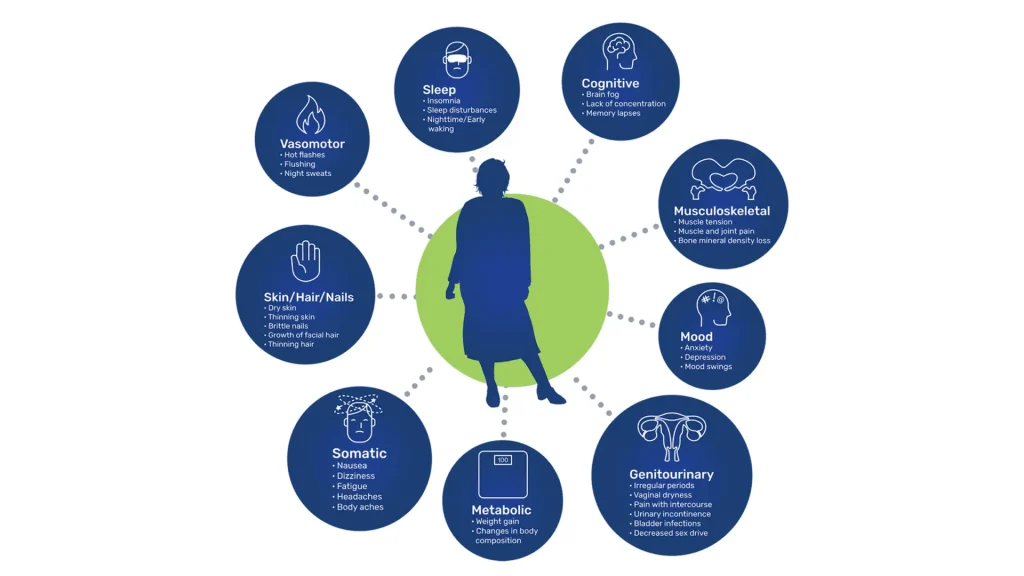
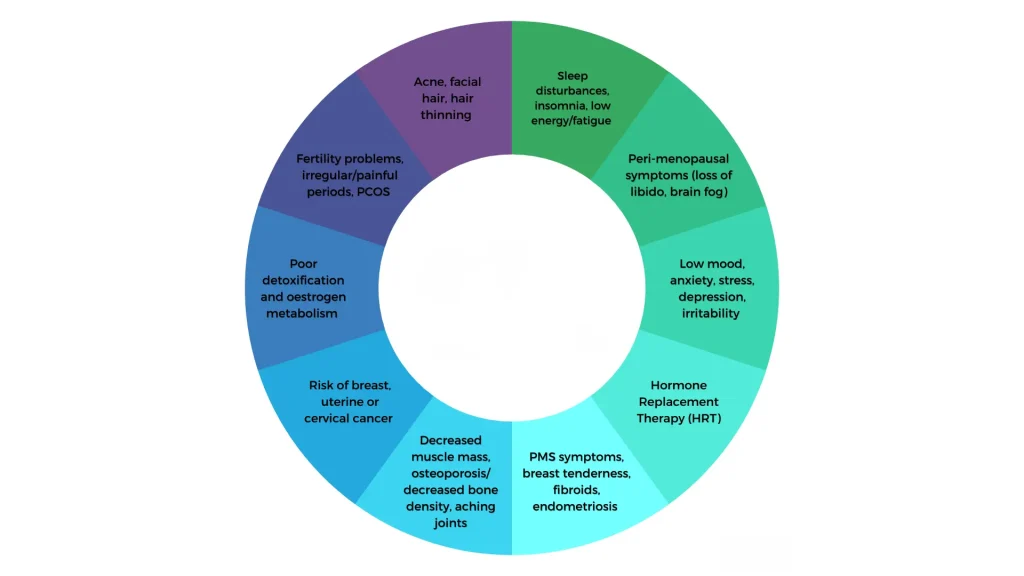
The 12 Most Common Signs You May Need HRT
Most patients don’t arrive with one symptom — they arrive with a constellation. The list below covers the patterns we see most often in practice. If three or more sound uncomfortably familiar and they’ve persisted for more than a few months, that’s a reasonable trigger to test rather than wait.
1. Persistent fatigue that sleep doesn’t fix
Sleeping eight hours and still exhausted? Low estrogen, low testosterone, or thyroid issues all show up here. The fatigue that hits at 2pm isn’t laziness — it’s your hormones failing to deliver the steady energy production your cells need. Patients often describe it as moving through their day with the brakes on.
2. Brain fog and word-finding issues
Walking into a room and forgetting why? Searching for words mid-sentence? Estrogen affects cognitive function in ways that are still being mapped, and perimenopausal patients commonly describe brain fog as one of the earliest and most disorienting signs — long before periods become irregular.
3. Unexplained weight gain (especially around the midsection)
Eating the same, exercising the same, gaining weight anyway. Insulin sensitivity decreases as estrogen drops. Visceral fat accumulates. Body composition changes even when the scale barely moves. The math your body used to run quietly in the background suddenly stops working.
4. Sleep that’s broken — even if you fall asleep fine
Waking at 3am drenched in sweat? Tossing without reason? Progesterone has a calming, GABA-supporting effect on the nervous system. When it drops, sleep architecture suffers — less deep sleep, more wake-ups, and that flat, unrested feeling in the morning.
5. Hot flashes or temperature sensitivity
Sudden internal heat, flushing, sweating — the classic symptom most associated with perimenopause and menopause. For some women they’re a brief annoyance; for others they’re the most disruptive symptom on the list, derailing meetings, sleep, and confidence.
6. Night sweats
Waking up with damp sheets is a red-flag symptom. The same temperature dysregulation that causes hot flashes during the day shows up at night, and the resulting sleep disruption compounds every other symptom on this list.
7. Low libido or changes in sexual response
Disappearing desire, vaginal dryness, painful intercourse, or reduced orgasm intensity — all hormone-driven. Common in both perimenopause and andropause, and rarely just “in your head.” Estrogen, progesterone, and testosterone all play roles in sexual function for women and men alike.
8. Mood changes — anxiety, irritability, low mood
Feeling like a stranger to your own emotional baseline? Hormonal shifts affect serotonin, dopamine, and GABA — the same systems mood medications target. Many patients are prescribed antidepressants when the underlying driver is actually a fixable hormone shift.
9. Hair thinning or skin changes
Hair feels finer, scalp shows more, skin loses fullness and elasticity. Lower estrogen reduces collagen production; thyroid changes can dull skin and weaken hair. Many of the “sudden aging” patients describe is hormonal, not chronological.
10. Joint aches and morning stiffness
Estrogen has anti-inflammatory effects in joints. As it declines, many women feel new aches in fingers, hips, knees, and shoulders that weren’t there before. It’s often the first symptom patients dismiss as “just getting older.”
11. Irregular periods or skipped cycles
Cycles getting shorter, longer, heavier, lighter, or more spaced out. The clearest perimenopausal signal — but also one of the easiest to dismiss because it can fluctuate for years before menopause is “official.” Track your cycles; the pattern matters more than any single month.
12. Loss of muscle mass or strength
Strength training the same way but seeing less return? Recovering more slowly? Testosterone and growth hormone decline both factor in. Common in men in their 40s and beyond, and increasingly recognized in women through perimenopause and menopause.
When Symptoms Warrant HRT vs. Lifestyle Changes
If you have three or more of the symptoms above persisting for more than three months, hormone testing is reasonable — not alarmist. The goal is data, not a prescription on day one. A good provider will look at your panel, your history, and your symptoms together before recommending anything.
Lifestyle is foundational. Sleep, nutrition, stress management, strength training, and protein intake help every patient and amplify any treatment plan we layer on top. But when numbers are clinically low and symptoms are interfering with work, relationships, or sleep, lifestyle alone often isn’t enough — and waiting it out can mean years of suffering for a problem that has well-tested clinical answers.
The November 2025 FDA Update — What Changed
For more than two decades, systemic estrogen products carried a class-wide black box warning, added in 2003 after the Women’s Health Initiative (WHI) study raised concerns about cardiovascular and breast cancer risks. That warning shaped a generation of patient and provider hesitation. In November 2025, the FDA removed it. The decision followed years of re-analysis showing that the original WHI risk numbers were overstated for the typical patient population — women under 60 and within 10 years of menopause — and that for symptomatic patients in this window, benefits commonly outweigh risks.
Practically, this means the conversation around HRT has changed. It’s no longer framed as a risky last resort but as a reasonable, evidence-based option for symptomatic patients with appropriate screening. It doesn’t mean HRT is for everyone — risk profiles still matter — but it does mean fewer patients should be told to white-knuckle their way through symptoms that have a clinical solution.
Types of HRT Available
HRT isn’t one-size-fits-all. The right delivery method depends on your symptoms, hormone levels, lifestyle, and how your body absorbs and metabolizes hormones. Here are the main options we discuss with patients.
Bioidentical hormone pellets (EvexiPEL)
Plant-derived hormones with molecular structures identical to those your body produces. Tiny pellets are inserted just under the skin in a quick in-office procedure and release steady levels of hormone over 3 to 6 months. The big advantage: no daily dosing, no peaks and valleys, and consistent symptom control.
Femme uses the EvexiPEL protocol — a clinically managed pellet system used by trained providers nationwide. Pellets are particularly well-suited to patients who’ve struggled with adherence on creams or pills, or who want to avoid the daily emotional rollercoaster of fluctuating hormone levels.
Topical creams and gels
Daily application to the skin. Easy to start, easy to stop, and dose-flexible for patients who need fine-tuning. Less convenient than pellets and can transfer to others through skin contact, but a solid option for patients beginning HRT or those who want maximum control over dosing.
Oral capsules
Pill form is the most familiar to patients and the easiest entry point for some. Some hormones, particularly oral estrogens, are processed through the liver first — which can affect clotting factors and other downstream pathways. Provider judgment matters here, and oral routes aren’t always the best fit despite their familiarity.
Patches and injections
Weekly transdermal patches deliver hormones steadily through the skin and bypass the liver. Injections — particularly for testosterone optimization in men — are common and well-established. Each method has trade-offs in convenience, dosing precision, and steady-state hormone levels, which we walk through during consultation.

HRT for Men
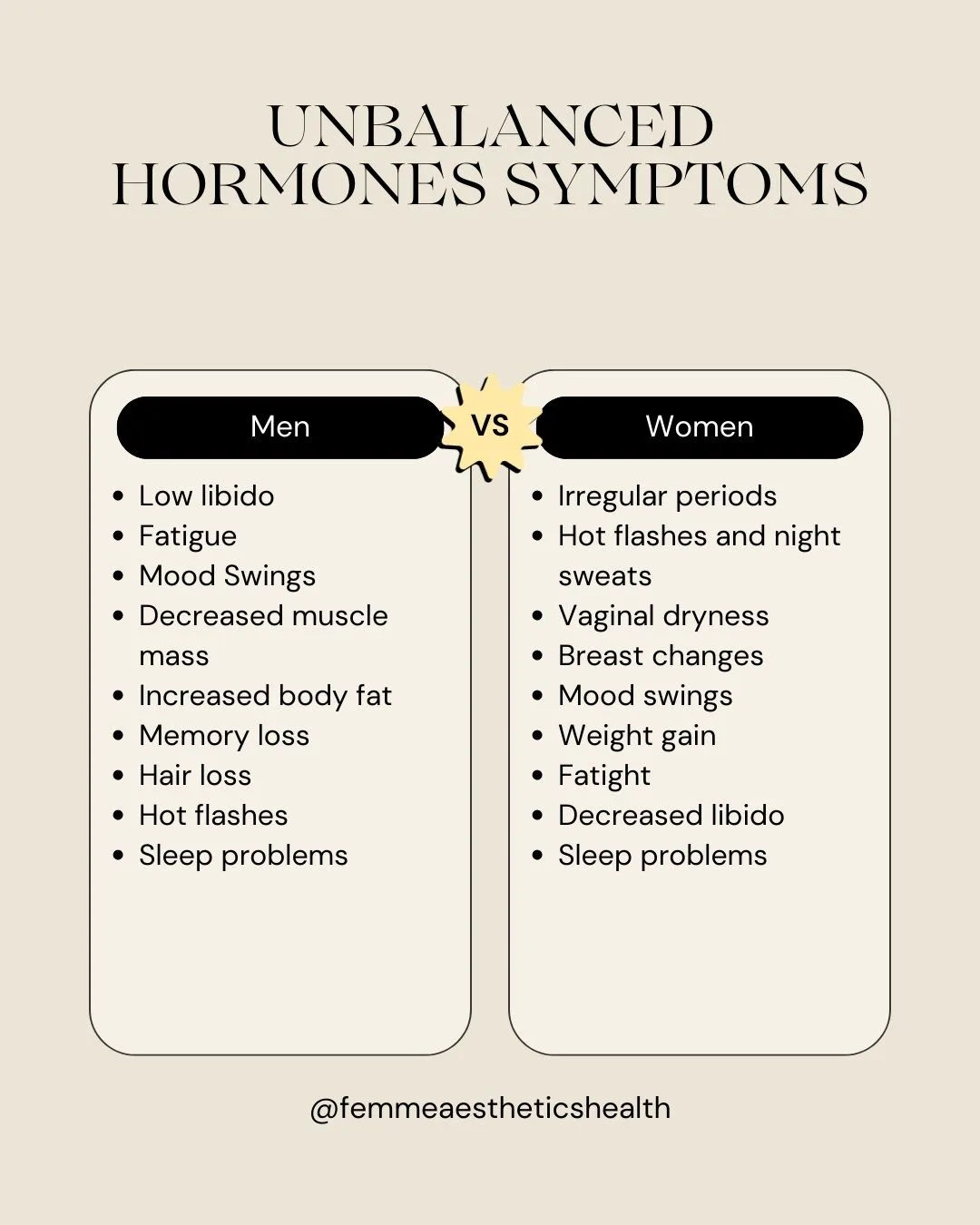
HRT for men centers on testosterone optimization. The symptoms of “low T” overlap surprisingly with perimenopause symptoms in women: persistent fatigue, weight gain (especially abdominal), mood changes, low libido, reduced motivation, slower recovery from workouts, and trouble building or holding muscle. Men frequently dismiss these for years as “just stress” or “just aging.”
Andropause is real and often undertreated. Thorough lab panels are essential — total testosterone alone misses the picture. Free testosterone, SHBG, estradiol, DHEA-S, thyroid markers, and metabolic labs all factor in. With proper screening and a properly dosed protocol, most men report meaningful improvement in energy, body composition, and quality of life within a few months.
How to Get Tested
Comprehensive panels typically include estradiol, progesterone, testosterone (total and free), DHEA-S, thyroid (TSH, free T3, free T4, sometimes reverse T3), cortisol rhythm where indicated, vitamin D, and B12. For men, we add SHBG and a metabolic panel. The exact mix is tailored to your symptoms — testing every marker isn’t the goal; testing the right ones is.
Femme’s consultation process reviews your symptoms first, then orders labs aligned to your presentation. We don’t hand you a generic panel and call it a day. We talk through what you’re experiencing, ask the questions that often get skipped, and build a testing plan that actually answers your specific question.
What to Expect — Timeline & Lifestyle
Most patients begin to notice shifts within the first few weeks of starting HRT — better sleep, steadier mood, returning energy. By the three-month mark, the majority report meaningful symptom improvement. By six months, most are at full benefit and we’re fine-tuning rather than rebuilding. Pellet patients typically reassess every 3 to 6 months; cream and oral patients more frequently.
Lifestyle integration is what amplifies results. Strength training preserves and builds the muscle HRT helps protect. Adequate protein supports hormonal pathways. Sleep hygiene reduces cortisol load. Stress reduction helps the whole system stay regulated. Patients who lean into all four typically see the strongest, most durable results — HRT is a foundation, not a shortcut.