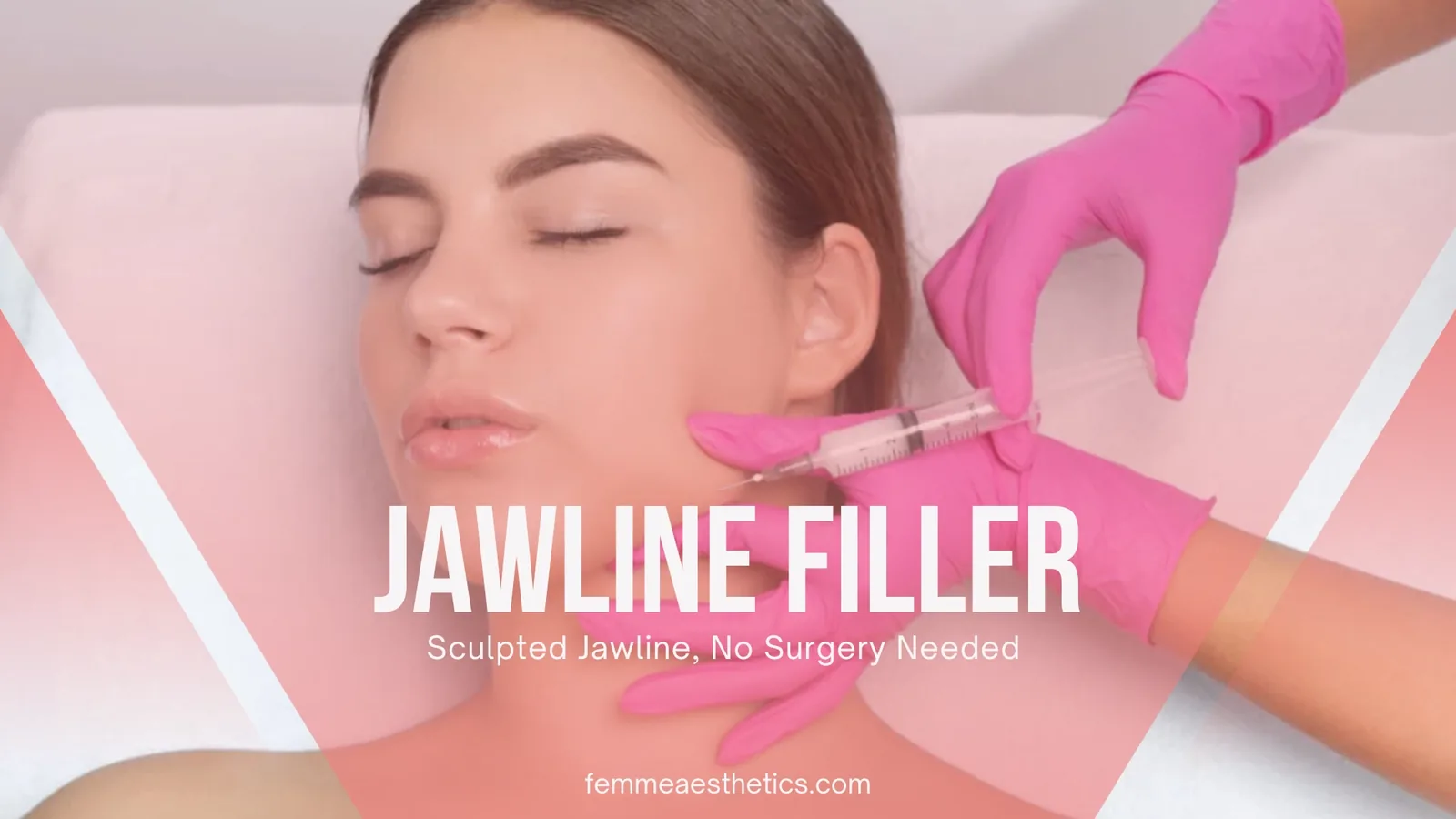
A defined chin and balanced jawline anchor the lower third of the face — but there’s a smaller, often-overlooked detail that quietly ages a face when it goes unaddressed: the chin shadow. It’s the soft hollow that sits between your lower lip and your chin (the labiomental crease), and as it deepens with age or volume loss it casts a real visible shadow that makes the entire lower face look heavier and more drawn.
This content is for educational purposes only and does not constitute medical advice. Individual results may vary. Consult a qualified healthcare provider before undergoing any treatment or procedure.
Chin shadow filler is the precise, targeted treatment for this specific zone — not the same as building chin projection, and not the same as smoothing marionette lines, though it pairs beautifully with both. To see if it’s the right fit for your face, book a consultation with Idelsis Trelles, PA-C at Femme Aesthetics in Miami.
The Chin Shadow: A Small Detail With Big Impact
The labiomental crease is a normal anatomical feature — everyone has one. It’s the soft transition zone between the muscle of the lower lip and the bony chin. In a young, well-supported face, it’s a gentle inflection that you barely notice. With age it deepens, often because of three layered changes:
- Loss of soft tissue volume beneath the lower lip
- Slight retrusion of the bony chin or pre-jowl resorption
- Skin laxity that lets the surrounding area sag inward
The result is a real shadow, especially in harsh overhead light or front-facing camera angles. Patients often describe it as “looking heavier in selfies than in the mirror” or notice it when scrolling through video calls.
How Chin Shadow Filler Works
Chin shadow filler uses a hyaluronic-acid dermal filler — usually a mid-density product like Juvederm Volift or Restylane Defyne — placed precisely in and around the labiomental crease to support the soft tissue and smooth the transition between lip and chin. Most treatments use 0.5 to 1 mL total, which is a small amount by filler standards.
A skilled injector treats this as part of a broader lower-face plan. The shadow rarely exists in isolation — usually there’s some pre-jowl shadowing, sometimes a softening of the chin itself, occasionally marionette involvement. Chin shadow filler is the precision touch that ties those zones together so the whole lower face reads balanced.
How It Differs From Other Chin and Jaw Treatments

Three treatments live in the same anatomic neighborhood but solve different problems:
- Standard chin filler adds projection to the bony chin itself — usually for a weak or retruded chin. Volume goes on the bone.
- Jawline filler defines the angle of the jaw and along the mandibular border. It’s structural, not subtle.
- Chin shadow filler targets the soft tissue specifically between the lower lip and chin, smoothing a labiomental crease that’s grown too deep.
Patients often need a combination. A common pairing for a 40-something patient with a noticeably aged lower face is: a small amount of chin filler for projection, chin shadow filler for the labiomental crease, and Botox to the depressor anguli oris to relax the downward pull on the mouth corners (see our guide to marionette lines).
The Treatment Experience
A chin shadow filler appointment is short and very tolerable:
- Assessment. Your injector evaluates your full lower-face balance in three dimensions: chin, jaw, mouth corners, and the labiomental crease in context.
- Topical numbing. A lidocaine cream is applied for 10 to 15 minutes. Most modern fillers also contain lidocaine internally.
- Injection. A fine needle or cannula places small amounts of filler in and around the crease. Total injection time is usually 5 to 10 minutes.
- Sculpting. Gentle massage ensures even distribution and a smooth contour.
- Final assessment. You sit up, look in the mirror, and the injector refines as needed.
You’ll see most of the result the same day. Mild swelling, tenderness, or pinpoint bruising can last 24 to 72 hours. There’s no real downtime — most patients return to normal activities immediately.
Who’s a Good Candidate?
Chin shadow filler is a strong fit if any of the following sound like you:
- You see a persistent shadow beneath your lower lip, especially in selfies or video calls
- Your lower face looks heavier or more drawn than your upper face
- You’ve had filler elsewhere (lips, cheeks, chin) and still feel unbalanced
- You’re starting to notice marionette lines or pre-jowl shadowing
- You want a refined, targeted change rather than dramatic restructuring
It’s less of a fit if your chin is significantly retruded (you may need chin projection filler first), if you have very thin skin in the labiomental area (volume can be visible under thin tissue), or if you have active skin conditions in the lower face.
Results, Longevity, and Maintenance
Hyaluronic-acid filler in this area typically lasts 9 to 18 months. The crease holds well because the area moves less than the lips or cheeks. Most patients return for a small top-up between 12 and 18 months — using less product than the initial treatment because the foundation is already in place.
To protect the result, the basics matter: daily broad-spectrum SPF, avoiding extreme weight fluctuations, and not smoking (smoking accelerates volume loss across the lower face).
Choosing the Right Injector
Chin shadow filler is technically simple but conceptually subtle. The best injectors approach it as a facial-balancing decision, not a single-point fix — they look at how your lower lip relates to your chin, how your chin relates to your jawline, and how your jawline relates to your cheekbones. Choose someone who:
- Discusses the full lower-face plan before recommending shadow filler alone
- Uses a mid-density HA appropriate for the labiomental crease
- Will tell you honestly when chin projection or jowl filler is the better starting point
- Shows you their own before/after work for this specific area
Ready to balance the lower face? Book a consultation, call (786) 250-4133, or email info@femmeaesthetics.com. Explore related options on our services page.
Disclaimer: The information provided is intended for general educational purposes and should not replace professional medical consultation. Results are not guaranteed and may vary by individual. All procedures carry potential risks and side effects — discuss these with your provider before making any decisions.