
Dark circles aren’t one thing — they’re at least four overlapping conditions that look similar from the outside but need very different treatments. The reason most over-the-counter products underperform isn’t that they’re bad; it’s that they’re aimed at the wrong cause. A vitamin C eye cream is meaningful for pigmentary dark circles and largely useless for structural ones. Filler is transformative for hollow tear troughs and pointless for vascular shadowing. The right starting point is figuring out which kind you actually have.
This content is for educational purposes only and does not constitute medical advice. Individual results may vary. Consult a qualified healthcare provider before undergoing any treatment or procedure.
This guide walks through the four common causes, what actually works for each, and when to escalate from home routines to in-office treatment. For a personalized assessment of which type you have and what fits, book a consultation with Idelsis Trelles, PA-C at Femme Aesthetics in Miami.
The Four Real Causes of Dark Circles

1. Vascular (Most Common)
The skin under the eye is the thinnest skin on your body. Blood vessels and the dark venous blood inside them are visible through it — that’s what creates the bluish-purple cast you see in many fair-skinned patients. Fatigue, dehydration, and allergies all dilate those vessels and make the cast more visible. Vascular dark circles are usually worst in the morning and improve as the day goes on.
2. Pigmentary
Excess melanin in the skin under the eye creates a brown or grey-brown shadow. This is genetic for many patients, especially those with darker skin tones or South Asian, Middle Eastern, and Latin heritage. Sun exposure on the cheeks and lower lids worsens it over time. Pigmentary dark circles tend to look the same throughout the day.
3. Structural (Hollow)
A natural depression called the tear trough sits between the lower lid and the cheek. As facial fat and bone change with age, that depression deepens and casts a real shadow on the under-eye. You can identify a structural component by gently pressing below the eye: if the area feels physically lower than the cheek, structure is part of your story. This type doesn’t respond to creams at all.
4. Behavioral
Poor sleep, chronic eye-rubbing (from allergies or screen fatigue), dehydration, and high alcohol intake all show up under the eyes. Behavioral dark circles vary day-to-day and are the first thing we ask about because they amplify all three of the other types.
Most patients have a mix — commonly vascular plus behavioral, or pigmentary plus structural. The treatment plan is built around the dominant cause first.
What Actually Works: At-Home Treatment

Look for these ingredients, used consistently for 8 to 12 weeks:
- Vitamin C — brightens pigmentary discoloration. Best in the morning under SPF.
- Niacinamide — reduces pigment transfer and supports the skin barrier.
- Caffeine — constricts dilated under-eye vessels temporarily, useful for vascular and morning puffiness.
- Peptides — support collagen, modestly help thicken the under-eye skin over time.
- Retinol — thickens the skin and reduces pigment transfer. Start at 2 nights a week and build slowly — the under-eye area is sensitive.
- Hyaluronic acid — plumps and smooths the surface, can mask mild hollows temporarily.
What to skip: heavy fragrances, alcohol-based formulas, harsh exfoliants under the eye, and anything that promises overnight results. The under-eye area responds slowly — expect 2 to 3 months before you can fairly judge an eye cream.
When to Move to In-Office Treatment
If you’ve been consistent with a quality eye cream for 12 weeks and you’re still bothered by what you see, the next step depends on the cause:
- Hollow / structural: Under-eye filler (tear trough filler). See our under-eye filler tips guide.
- Pigmentary: IPL, fractional laser resurfacing, or topical prescriptions like hydroquinone (short-term) or tranexamic acid.
- Vascular: Pulsed-dye laser for visible vessels; sometimes nothing more than the right eye cream.
- Mixed: A layered plan — filler first to address structure, then IPL or laser sessions for residual pigment.
Under-eye filler is one of the most powerful single treatments in aesthetics, but it’s also one of the easiest to overdo. Used at the right dose, in the right plane, it disappears the shadow. Used incorrectly, it creates a puffy, sometimes blue-tinged bag. Choose an injector who treats tear troughs frequently and uses cannula technique.
Common Myths Worth Discarding
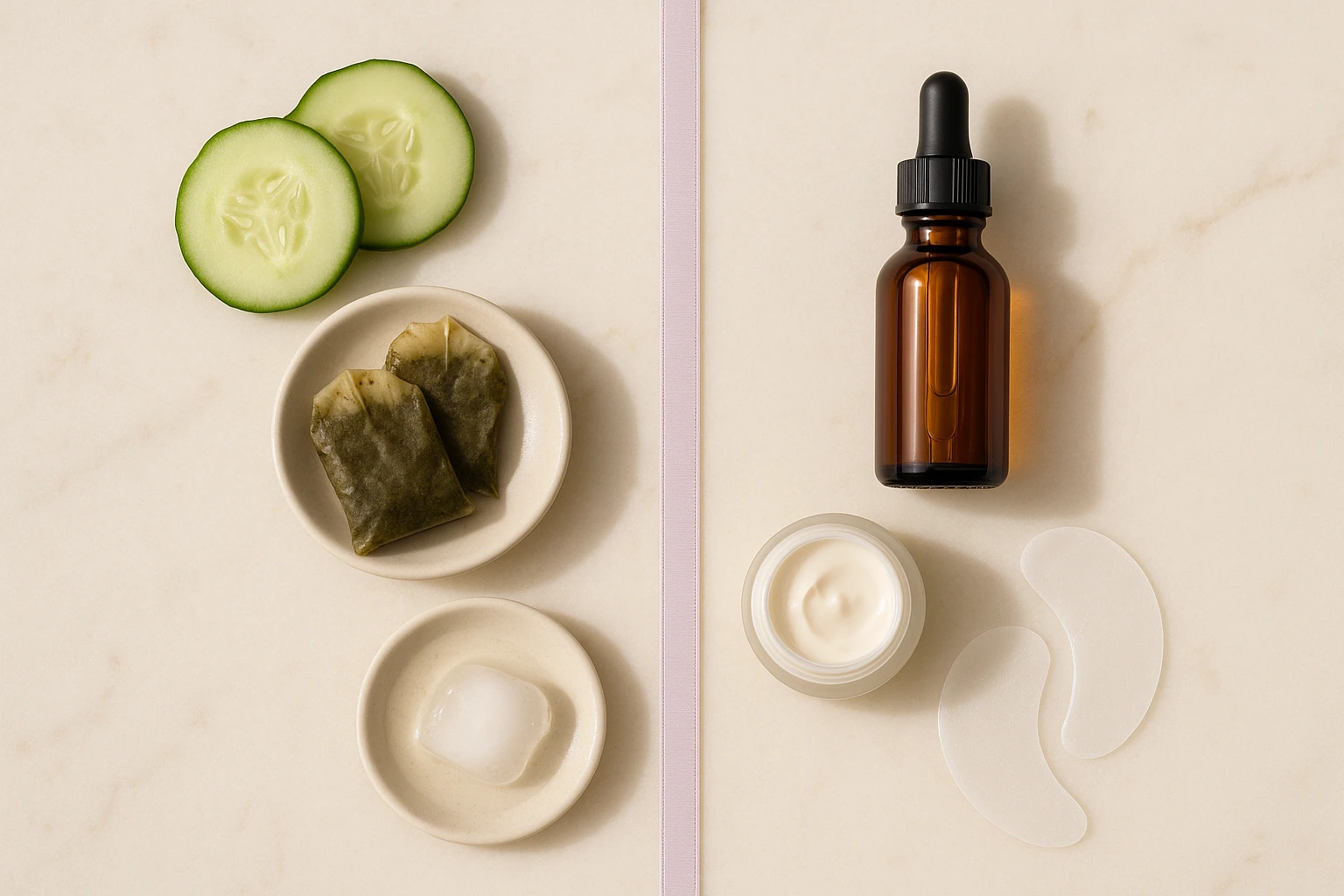
- “Cold spoons or cucumbers” — They constrict vessels briefly, so puffiness drops for 20 minutes. They don’t affect pigment, structure, or actual dark circles long-term.
- “More sleep will fix it” — Only true for behavioral and morning vascular dark circles. Genetic pigment and structural hollows are unaffected by sleep.
- “Hemorrhoid cream depuffs under-eyes” — Some shrink swelling temporarily, but the ingredients aren’t formulated for facial skin and can cause irritation. Caffeine eye cream is the appropriate version.
- “Concealer will eventually clear them” — Concealer covers; it doesn’t treat. It’s a tool, not a fix.
Habits That Actually Make a Difference
The unglamorous baseline that matters more than any product:
- Daily broad-spectrum SPF 30+ applied through the cheekbones to under the brow
- 7 to 9 hours of sleep on a consistent schedule
- Switch to a gentle micellar-water makeup remover — the dragging motion of cotton-pad cleansing damages under-eye skin over time
- Treat allergies actively if you have them — chronic rubbing is invisible until you stop it for a week and notice the change
- Stay hydrated and limit alcohol the night before days that matter
These habits don’t replace treatment for severe dark circles, but they amplify every other treatment you do.
Ready to figure out which type of dark circles you actually have? Book a consultation, call (786) 250-4133, or email info@femmeaesthetics.com. See our under-eye rejuvenation guide for a deeper look at the full treatment menu.
Disclaimer: The information provided is intended for general educational purposes and should not replace professional medical consultation. Results are not guaranteed and may vary by individual. All procedures carry potential risks and side effects — discuss these with your provider before making any decisions.