
The forehead is one of the most cautious zones in injectable medicine — not because the treatment is dramatic, but because over-treating here is what creates the heavy, dropped, “done” look most patients are trying to avoid. Forehead filler, used in small amounts by an experienced injector, smooths the static lines that Botox alone can’t lift. Used wrong, it’s the fastest way to make a face look older than it did before treatment. Restraint is the whole skill.
This content is for educational purposes only and does not constitute medical advice. Individual results may vary. Consult a qualified healthcare provider before undergoing any treatment or procedure.
This guide covers when forehead filler is genuinely the right answer (it’s rarely the only answer), what the treatment looks like, and how to know if your injector is treating this zone with the care it requires. To get a personalized read on your forehead, book a consultation with Idelsis Trelles, PA-C at Femme Aesthetics in Miami.
Understanding Forehead Filler Treatments
The forehead has two distinct kinds of lines:
- Dynamic lines appear when you raise your brows. They’re caused by frontalis muscle contraction and they disappear when the face is at rest. Botox treats these; see our guide to Botox units for the forehead.
- Static lines stay visible at rest. They’re caused by an actual groove etched into the dermis over decades of muscle movement. Botox alone won’t lift them out — the groove needs to be filled from below.
Forehead filler addresses static lines. Small amounts of a thin hyaluronic-acid filler are placed superficially under the lines themselves. Done well, the surface looks smooth, the lines look softened, and there’s no visible product. Done aggressively or with the wrong filler, the forehead can look puffy, weighted, or develop visible lumps.
Areas of the Face: Beyond the Forehead
Filler is rarely a single-area treatment. The forehead almost always works better when treated as part of a broader plan that respects the relationships between the upper, middle, and lower face:
- Temples — often the missing piece when the forehead looks hollow rather than wrinkled. Filling the temples first sometimes makes forehead filler unnecessary.
- Brow area — a small amount of filler at the lateral brow can lift the brow visibly and reduce the heavy look that drives forehead wrinkles.
- Midface — the upper cheek connects to the lower forehead; sometimes the forehead reads wrinkled because the midface has lost support.
A good consultation looks at all three of these in addition to the forehead itself. If your injector only proposes forehead, that’s a flag.
Achieving Desired Filler Results

A real forehead filler appointment:
- Consultation. Your injector evaluates dynamic vs static lines, brow position, temple volume, and midface support. Numbing cream is applied (forehead is moderately sensitive).
- Mapping. Specific deposit points are marked — usually 4 to 8 microbolus placements across the forehead, depending on line distribution.
- Injection. A blunt-tip cannula or fine needle delivers very small amounts of filler superficially under each line. Total volume is typically 0.5 to 1 mL.
- Massage. Light molding to integrate the filler smoothly.
- Aftercare. No exercise, alcohol, or pressure on the forehead for 24 hours. Slight bruising at injection points is normal; visible lumps should be reported immediately.
Final result settles at 2 weeks. We always book a follow-up at that point to assess and refine if needed.
How Long Do Fillers Last?
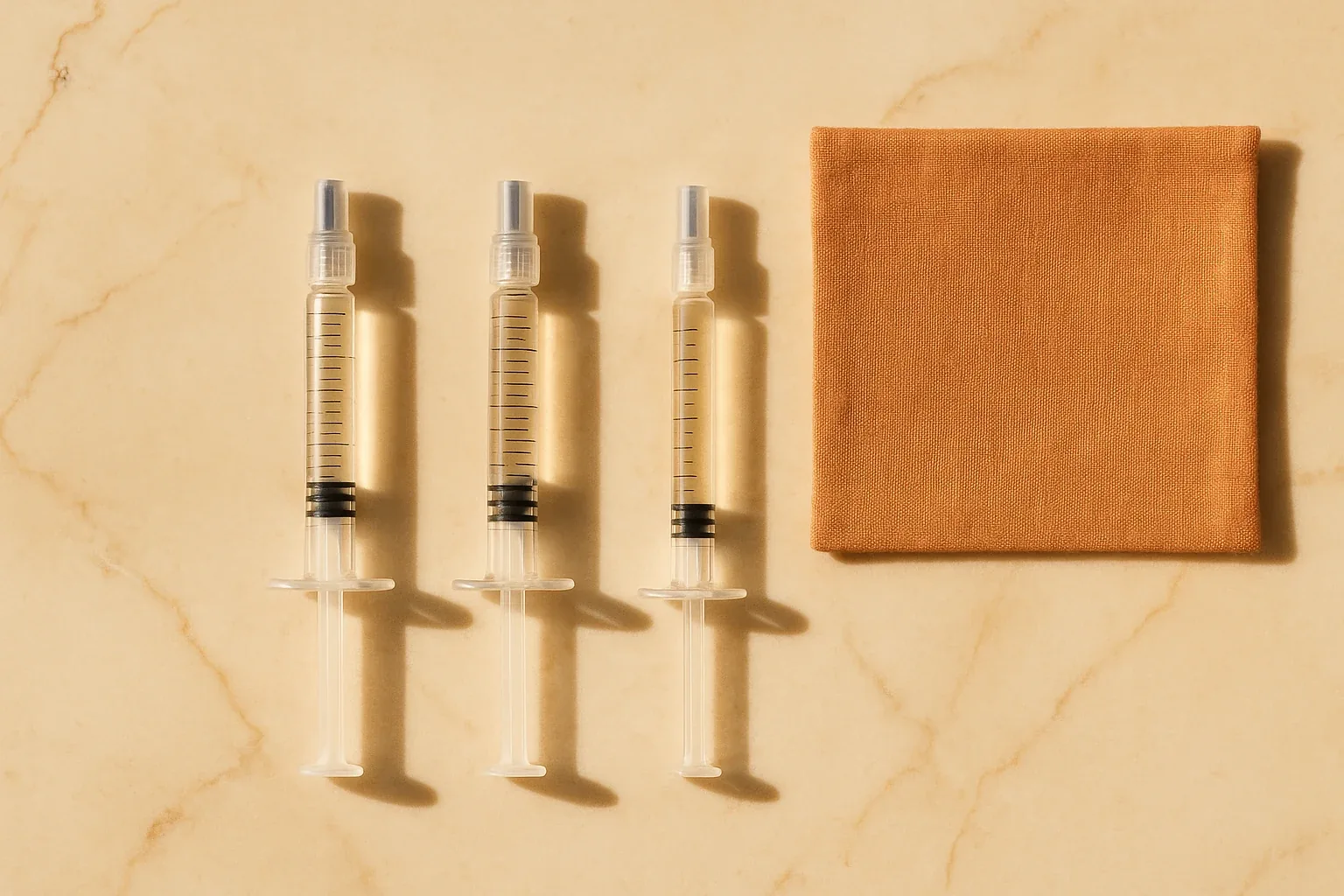
Hyaluronic acid forehead filler typically lasts 9 to 18 months. Three factors drive longevity:
- The product itself. Thinner HA gels (which are what we use on the forehead) break down faster than thicker structural fillers used elsewhere.
- Muscle movement. The forehead moves constantly — frowning, raising brows, expression. Movement accelerates filler breakdown.
- Your metabolism. Faster metabolizers re-absorb filler quicker.
Most patients return for a small top-up at 9 to 12 months rather than waiting for the filler to fully dissolve. Topping up uses about half the original volume because the foundation is still partially in place.
When Forehead Filler Isn’t the Right Answer
An honest provider will tell you when filler isn’t the right call:
- If your forehead lines are still mostly dynamic (visible only with expression), Baby Botox or standard Botox is the right tool, not filler.
- If the forehead is hollow but not wrinkled, Sculptra in the temples and lateral forehead rebuilds volume gradually over months — often a better answer than filler for this presentation.
- If there’s significant brow descent, treating the brow with Botox (or surgically lifting it) addresses the root issue.
- If you’ve already had forehead filler that’s starting to look heavy, the right answer is dissolving with hyaluronidase, not more filler.
Ready for an honest read on your forehead? Book a consultation, call (786) 250-4133, or email info@femmeaesthetics.com. See related options on our services menu.
Disclaimer: The information provided is intended for general educational purposes and should not replace professional medical consultation. Results are not guaranteed and may vary by individual. All procedures carry potential risks and side effects — discuss these with your provider before making any decisions.