
Lip filler migration is the technical term for what social media calls the “filler mustache” — that soft puffy area that develops above the upper lip when filler moves out of place. It’s the single most common visible sign that someone’s lip work has gone sideways. The good news: it’s almost entirely preventable, and when it does happen with hyaluronic-acid filler, it’s completely reversible in 24 to 48 hours.
This content is for educational purposes only and does not constitute medical advice. Individual results may vary. Consult a qualified healthcare provider before undergoing any treatment or procedure.
This guide covers what migration actually looks like, what causes it, how a careful provider prevents it, and how it gets fixed when it’s already happened. To talk through your specific lips — whether you’re planning your first filler or trying to fix existing migration — book a consultation with Idelsis Trelles, PA-C at Femme Aesthetics in Miami.
Understanding Lip Filler Migration
Lip filler is meant to sit inside the body of the lip and along the vermillion border — the precise line where the pink of the lip meets the surrounding skin. When filler stays in that intended zone, the lip looks defined, the border is crisp, and there’s no puffiness above or below the lip.
When filler migrates, it moves upward (or occasionally outward) into the skin above the upper lip. That area — the philtrum region — isn’t designed to hold filler. It puffs up, blurs the lip border, and creates the soft “filler mustache” look that gives lip filler a bad reputation. In severe cases the philtrum (the natural groove above the upper lip) flattens completely.
Causes of Lip Filler Migration
Three causes, almost always combined:
- Too much filler at one visit. Lips can absorb a certain amount of product before pressure pushes filler outward. Inject more than that ceiling in one visit and migration starts within weeks.
- Wrong injection plane. Lip filler belongs in the deeper submucosal layer of the lip. Placed too superficially (just under the skin surface), filler has nowhere to integrate and slowly drifts upward into the easier path of the surrounding tissue.
- Stacking treatments too close. A 2-week-apart filler schedule doesn’t give existing filler time to integrate before adding more. The body sees accumulated product and the tissue starts to push it out.
Aftercare matters too. Sleeping face-down, aggressive lip pressing, hot yoga, and saunas in the first 24 hours can all displace freshly placed filler.
Preventing Lip Filler Migration
A migration-resistant lip filler treatment looks like this:
- Conservative volume per visit — 0.5 to 1 mL is standard, not 2+ mL
- Deep tissue plane (submucosal), not superficial
- 2 to 4 week minimum interval between treatments
- 2-week follow-up after each treatment to assess before deciding on more
- Honest provider conversation about realistic outcomes vs. social-media reference photos
And aftercare you can actually do:
- Sleep on your back for 24 hours (or at least don’t press the lip into the pillow)
- No straws, no aggressive kissing, no hot yoga, no sauna for 24 hours
- Avoid pressure on the lip for a week (no rough makeup application, no heavy lip masks)
- Skip retinoids and exfoliants on the lip area for 5 days
Solutions for Migrated Lip Filler
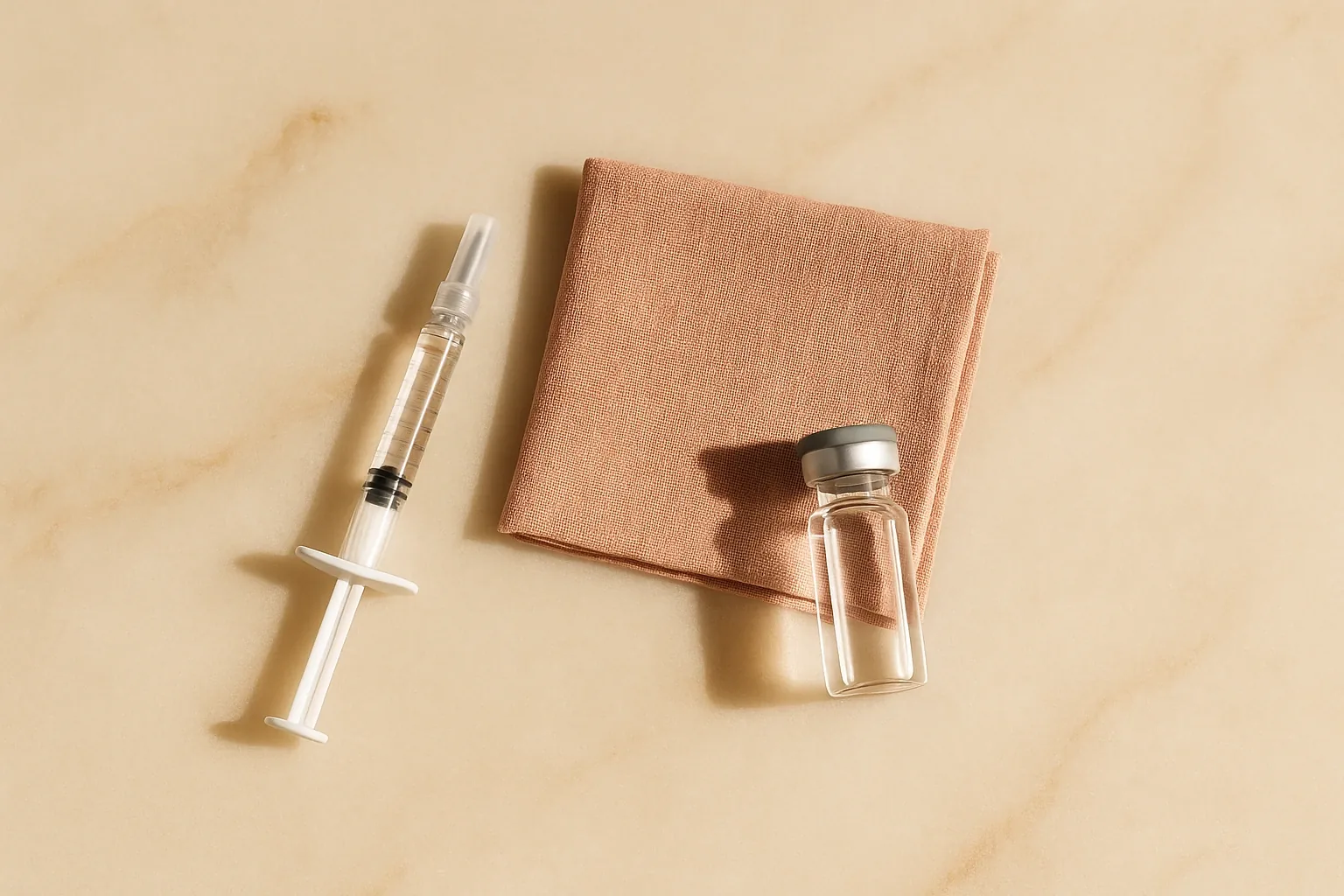
If migration has already happened, the fix is straightforward when the filler was hyaluronic acid (which is the standard for lips). An enzyme called hyaluronidase is injected into the migrated areas and dissolves the filler within 24 to 48 hours. The lip returns to its pre-filler state. After 2 to 4 weeks of recovery, you can rebuild with proper placement — or skip filler entirely if you prefer the natural look.
The dissolving process:
- Assessment. Your injector identifies the migrated areas and the volume to dissolve.
- Hyaluronidase injection. Small doses are placed into the affected zones. Most patients see significant change within 24 hours.
- Recovery. Mild swelling for 24 to 72 hours, then the lip settles to its natural state.
- Reset. Wait at least 2 weeks before any new lip treatment.
This is one reason hyaluronic-acid filler is almost always the right starting choice for lips — the reversibility is built in.
Choosing the Right Filler and Provider
Migration risk depends more on the injector than on the brand. Look for:
- Treats lips routinely (ask what percent of their practice is lip filler)
- Shows you their own before/after photos for lips specifically
- Discusses placement in the deep submucosal plane, not just “injection points”
- Uses an HA filler appropriate for lips (Restylane Kysse, Juvederm Volbella, RHA 2)
- Will say no to a treatment if your existing filler is recent or you’re asking for too much volume
For more on lip-treatment options that resist migration by design, see our Russian lip technique guide and our best lip filler guide.
Ready to fix migration or start fresh with the right placement? Book a consultation, call (786) 250-4133, or email info@femmeaesthetics.com.
Disclaimer: The information provided is intended for general educational purposes and should not replace professional medical consultation. Results are not guaranteed and may vary by individual. All procedures carry potential risks and side effects — discuss these with your provider before making any decisions.