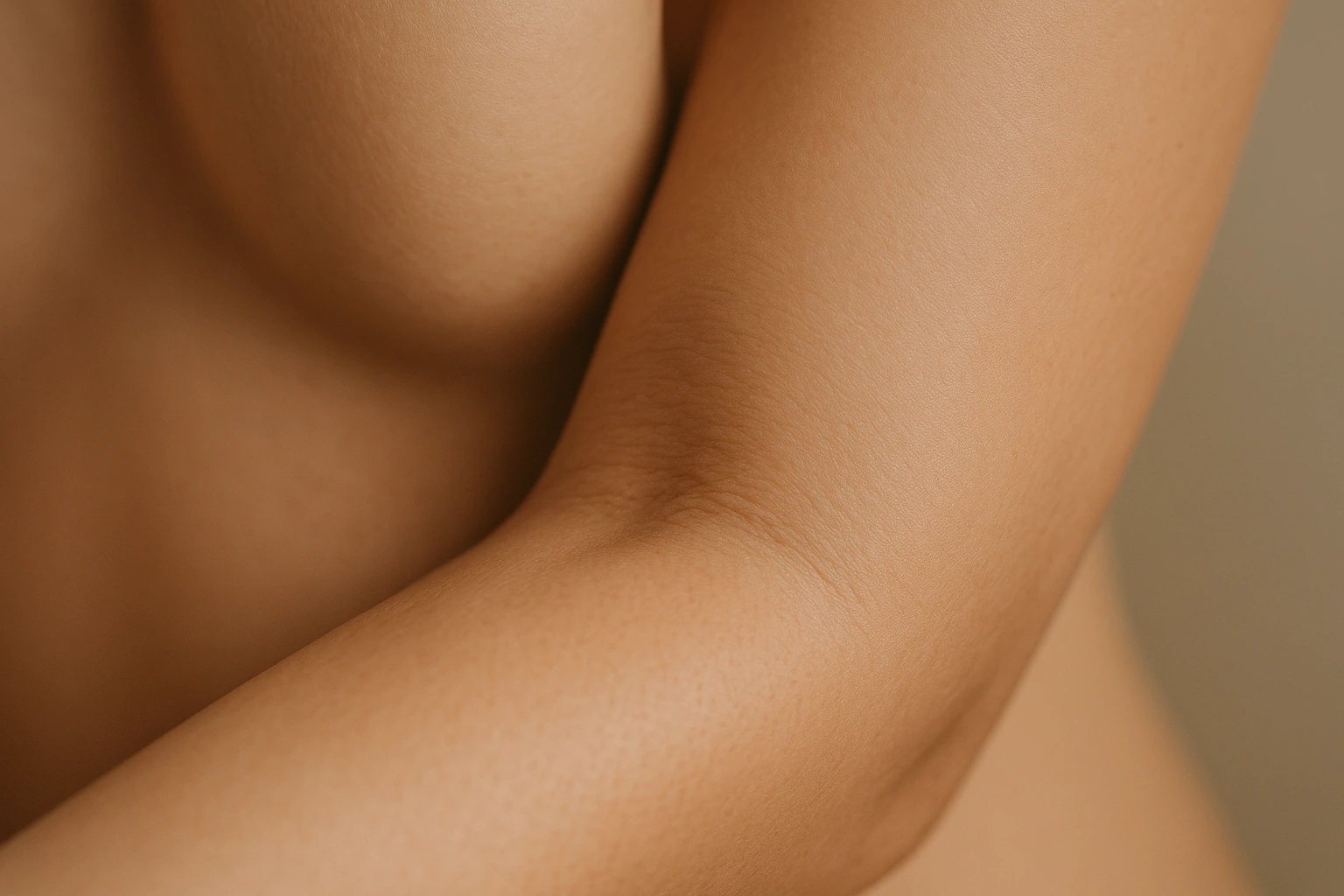
Thin, crinkly skin that creeps in around your elbows, knees, neck, or upper arms isn’t quite the same as wrinkles — and it doesn’t fully respond to wrinkle treatments either. Crepey skin is its own thing: a loss of structural collagen and elastin in the dermis that gives skin that papery, slightly slack look you can’t fully moisturize your way out of. The good news is it’s one of the most responsive concerns in modern aesthetic medicine. The bad news is the $200 jar of cream you saw on Instagram is unlikely to do it alone.
This content is for educational purposes only and does not constitute medical advice. Individual results may vary. Consult a qualified healthcare provider before undergoing any treatment or procedure.
This guide walks through what crepey skin actually is, what at-home creams and retinols can realistically accomplish, and where in-office treatments like Morpheus8, Sculptra, and lasers take over when topical care has hit its ceiling. To talk through your specific concern, you can book a consultation with Idelsis Trelles, PA-C at Femme Aesthetics in Miami.
What Crepey Skin Actually Is
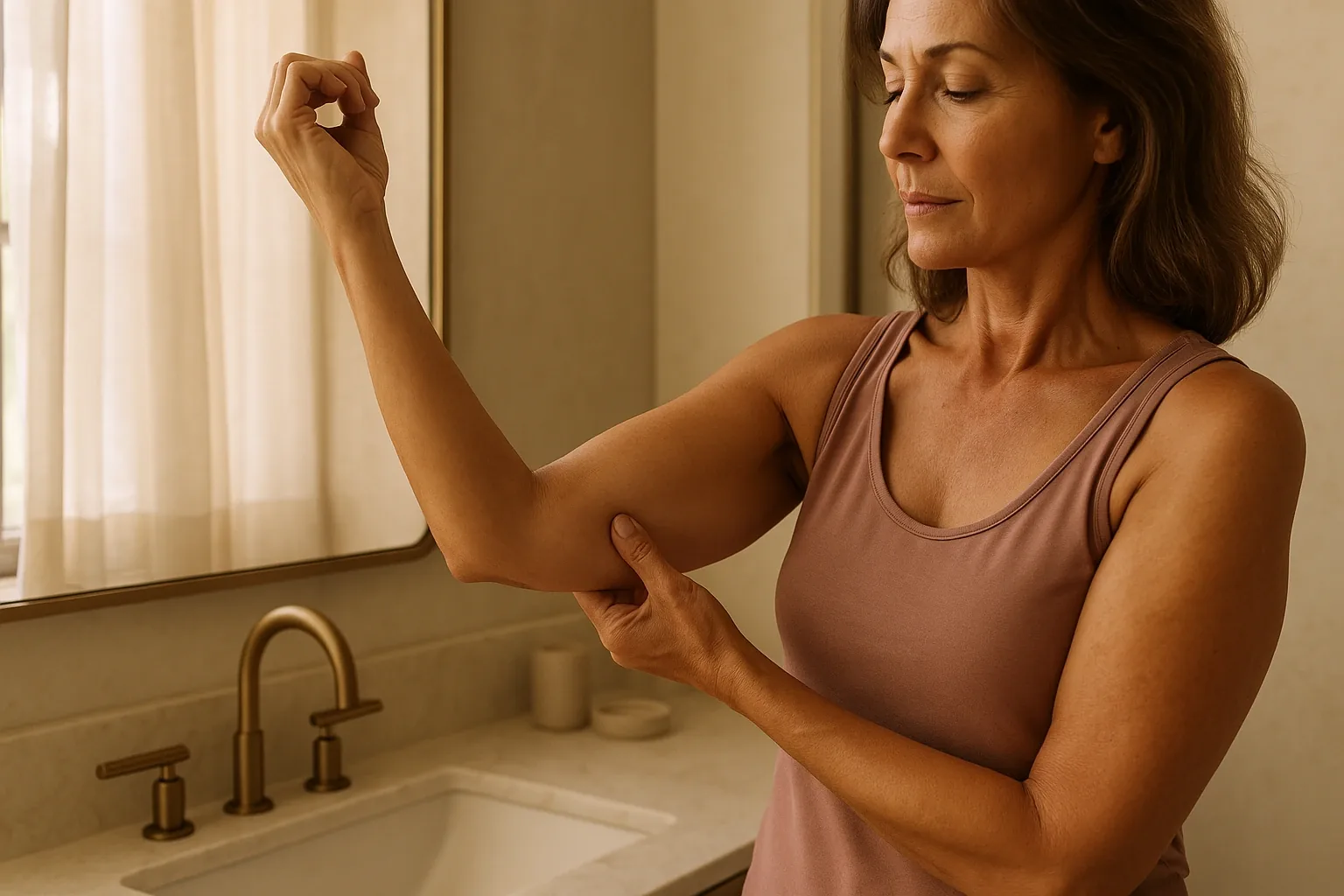
Crepey skin gets its name from crepe paper — thin, fine, slightly crinkled. Unlike a wrinkle, which is a specific crease made by repeated muscle movement, crepey skin is a generalized loss of skin tone over a larger area. It tends to show up first on:
- The upper arms, especially just above the elbow
- The chest and décolleté
- The neck and under the chin
- The inner thighs and around the knees
- The under-eye area
- The back of the hands
The mechanism is collagen and elastin loss in the dermis. According to the American Academy of Dermatology, skin loses about 1% of its collagen each year after age 20, and elastin — the protein that lets skin snap back — doesn’t regenerate well after damage. Sun exposure speeds it all up; the areas you didn’t bother to SPF over the decades are usually where crepey skin shows first.
Why It Happens
The biggest drivers are:
- Aging — collagen and elastin production drops year over year
- Sun damage — UV radiation breaks down both proteins and creates uneven texture
- Significant or rapid weight loss — including GLP-1 weight loss (see our guide to post-GLP-1 body contouring)
- Chronic dryness — a compromised lipid barrier dehydrates and fragments the skin earlier
- Genetics — some skin types simply start showing it sooner
At-Home Treatment: Creams and Lotions That Pull Their Weight
The right routine won’t reverse moderate crepey skin, but it will absolutely slow its progression and meaningfully improve mild cases. Look for three categories of ingredients.
Retinoids
Retinol — and prescription tretinoin — are the most evidence-backed topicals for crepey skin. They speed cell turnover and encourage new collagen production over months. A dedicated retinol body lotion is one of the few over-the-counter products with real data behind it. Build tolerance slowly: 2–3 nights a week before going daily.
Hyaluronic Acid, Glycerin, and Peptides
Humectants like hyaluronic acid and glycerin hold water in the dermis, plumping the skin and softening its appearance. Peptides signal the skin to produce more collagen. None of these “fix” crepey skin alone, but together they make the surface look noticeably less papery within weeks.
Daily Broad-Spectrum SPF
The single biggest cause of preventable crepey skin is sun exposure. SPF 30 or higher daily, applied to every area that sees sunlight — including the back of your hands and your chest — isn’t optional if you’re trying to maintain results from any other treatment.
Professional Treatment: When Topicals Aren’t Enough
Topical products can soften mild crepey skin, but they can’t rebuild the dermal collagen scaffold that’s already gone. For moderate-to-significant crepey skin — especially after major weight loss, on the arms, or on the neck — in-office treatments are where real structural change happens.
Morpheus8: RF Microneedling for Body and Face
Morpheus8 delivers radiofrequency energy through microneedles into the deeper dermis, triggering a controlled wound-healing response that rebuilds collagen and elastin. It’s the workhorse for crepey skin on the body — arms, abdomen, knees, neck. Most patients need 3 sessions, 4–6 weeks apart, with the full result developing over 3 to 6 months.
Sculptra: A Collagen Stimulator That Works From Within
Sculptra is a poly-L-lactic acid injectable that doesn’t add volume directly — it tells your skin to make more collagen, gradually, over months. For crepey skin on the décolleté, the back of the hands, and around the knees, it’s quietly one of the most effective treatments available. A series of 2–3 sessions typically holds for two years or more.
Laser and Light Treatments
Fractional CO2 and erbium lasers create thousands of microscopic columns of controlled injury, which the skin repairs with fresh collagen. They’re highly effective for crepey skin on the face, chest, and hands, but they require real downtime (5–10 days). Lower-intensity light therapies like IPL can be used in a series for milder cases with no downtime.
When Surgery Becomes the Right Answer
For severe skin laxity after major weight loss — especially on the upper arms or abdomen — a surgical lift may ultimately give a better result than any non-surgical option. We don’t perform that surgery in-house, but we’ll tell you honestly when RF, filler, or laser won’t be enough and refer you to a trusted plastic surgeon.
A Realistic Plan: Combining Approaches
The best results almost always come from layering. A typical Femme Aesthetics plan for moderate crepey skin on the upper arms looks like:
- A daily retinol body lotion plus AM SPF
- Three Morpheus8 Body sessions, 4–6 weeks apart
- A Sculptra series if underlying volume loss is significant
- Maintenance with one Morpheus8 session every 12 to 18 months
It’s not a $20 cream. It is, however, a result that’s actually visible to you and to the people who know your skin.
Prevention: Slow Crepey Skin Before It Starts
You can’t stop aging, but you can dramatically slow how crepey skin develops:
- Daily broad-spectrum SPF 30+ on every uncovered area, year-round
- Retinoid use starting in your 30s
- Hydration from the inside (water) and outside (occlusive moisturizers applied to damp skin)
- No smoking — it accelerates every mechanism above
- Avoid extreme rapid weight loss when possible; if you’re losing meaningfully on a GLP-1, talk to us before the laxity becomes severe
Ready to see what’s realistic for your skin? Book a consultation, call (786) 250-4133, or email info@femmeaesthetics.com. You can also browse our full services menu.
Disclaimer: The information provided is intended for general educational purposes and should not replace professional medical consultation. Results are not guaranteed and may vary by individual. All procedures carry potential risks and side effects — discuss these with your provider before making any decisions.